
Blog
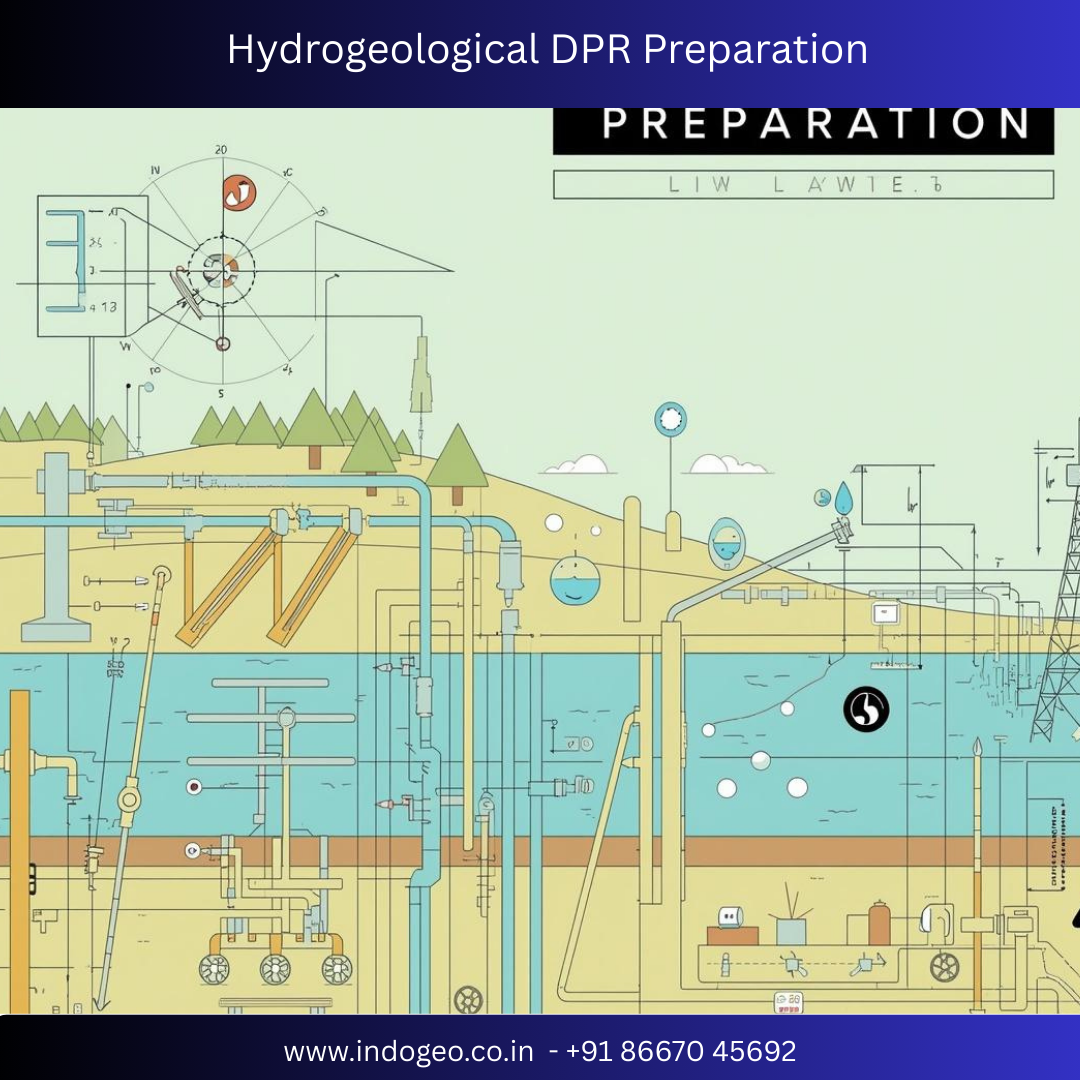
Hydrogeological DPR Preparation
Complete Guide for Groundwater Projects
Hydrogeological DPR Preparation is a critical step in planning groundwater development, recharge projects, irrigation systems, and industrial water supply schemes. A well-prepared Detailed Project Report (DPR) ensures technical feasibility, regulatory approval, financial viability, and long-term sustainability.
In this comprehensive SEO-optimized guide, we explain the importance, components, process, and benefits of professional Hydrogeological DPR preparation for water resource projects.
What is a Hydrogeological DPR?
A Hydrogeological Detailed Project Report (DPR) is a technical document that evaluates groundwater availability, aquifer characteristics, recharge potential, environmental impact, and project feasibility.
It is commonly required for:
Borewell and tube well projects
Groundwater extraction permissions
Industrial water supply approvals
Irrigation and agricultural water schemes
Recharge and watershed development projects
Government-funded water infrastructure programs
A DPR acts as the foundation for project approval and implementation.
Why Hydrogeological DPR Preparation is Important
💧 Scientific Groundwater Assessment
Ensures sustainable withdrawal without over-exploitation.
📜 Regulatory Compliance
Required for approvals from groundwater authorities.
💰 Financial Justification
Provides cost estimation and return-on-investment analysis.
🌱 Environmental Sustainability
Assesses recharge balance and ecological impact.
Key Components of Hydrogeological DPR Preparation
1️⃣ Project Overview & Objectives
This section includes:
Project background
Location details
Water demand estimation
Purpose (agriculture, industry, domestic, etc.)
Clear objectives define the scope and sustainability goals.
2️⃣ Hydrogeological Investigation
Detailed analysis of:
Geological formations
Aquifer characteristics
Water table depth
Seasonal fluctuation
Groundwater flow direction
Yield estimation
Advanced methods like resistivity surveys and GIS mapping are used for accurate data collection.
3️⃣ Water Quality Assessment
Parameters tested include:
pH
TDS
Hardness
Fluoride
Nitrates
Salinity
Water quality analysis ensures suitability for drinking, irrigation, or industrial use.
4️⃣ Recharge & Sustainability Analysis
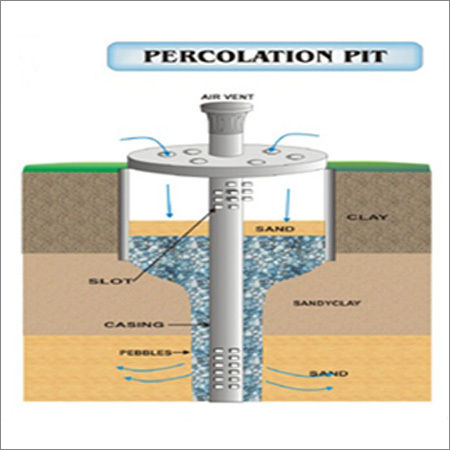
This section evaluates:
Annual rainfall data
Natural recharge rate
Artificial recharge feasibility
Rainwater harvesting structures
Watershed management planning
Schemes such as Atal Bhujal Yojana promote sustainable groundwater management through structured DPR documentation.
5️⃣ Technical Design & Cost Estimation
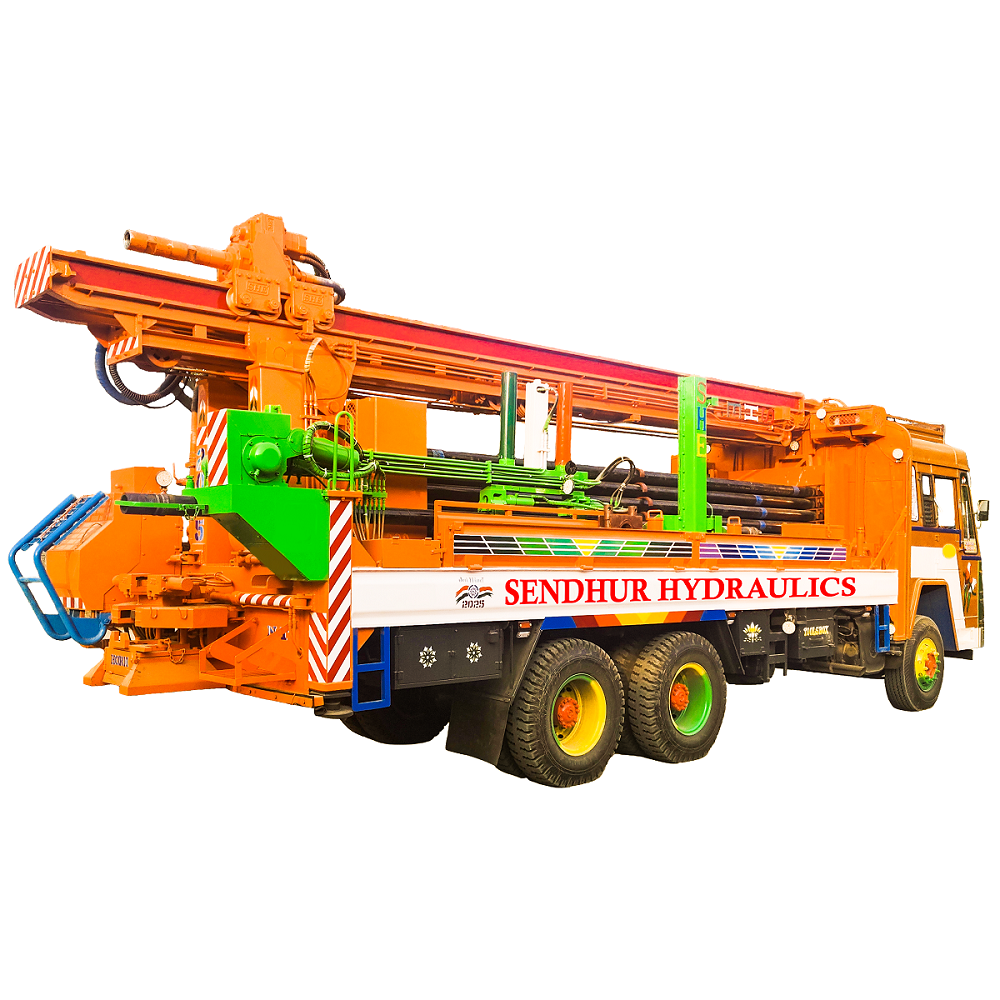

Includes:
Borewell design specifications
Pump capacity calculation
Pipeline layout
Storage infrastructure
Cost breakdown
Implementation schedule
This ensures technical feasibility and budget clarity.
6️⃣ Environmental & Regulatory Compliance
DPR must align with guidelines from:
Central Ground Water Authority
State Groundwater Departments
Pollution Control Boards
Environmental impact analysis ensures minimal ecological disruption and sustainable extraction limits.
Step-by-Step Hydrogeological DPR Preparation Process
1️⃣ Preliminary Survey
Field visit and data collection.
2️⃣ Geological & Geophysical Study
Subsurface investigation using scientific tools.
3️⃣ Data Analysis
Aquifer modeling and yield estimation.
4️⃣ Water Quality Testing
Laboratory evaluation.
5️⃣ Sustainability & Recharge Planning
Recharge balance calculation.
6️⃣ Technical Design & Costing
Infrastructure planning.
7️⃣ Final Documentation & Submission
Comprehensive DPR report preparation.
Who Needs Hydrogeological DPR Services?
✔ Industrial water extraction projects
✔ Agricultural irrigation schemes
✔ Real estate developers
✔ Infrastructure projects
✔ Government-funded rural water schemes
✔ NGOs working on watershed development
Benefits of Professional Hydrogeological DPR Preparation
📊 Accurate Groundwater Assessment
Reduces risk of dry borewells.
🛡 Legal Approval Support
Ensures compliance with groundwater laws.
💰 Financial Planning
Prevents unexpected project costs.
🌍 Sustainable Water Management
Maintains long-term aquifer health.
Common Challenges in DPR Preparation
Incomplete field data
Lack of rainfall records
Incorrect aquifer identification
Poor cost estimation
Regulatory documentation gaps
Professional consultants overcome these issues with systematic scientific methodology.
Future Trends in Hydrogeological DPR Preparation
GIS-based aquifer mapping
AI-driven groundwater prediction models
IoT-based water level monitoring
Climate resilience integration
Digital DPR documentation
Technology is transforming groundwater planning and project execution.
Conclusion
Hydrogeological DPR Preparation is essential for the successful implementation of groundwater development and recharge projects. A scientifically prepared DPR ensures sustainability, compliance, financial feasibility, and long-term water security.
Whether for agriculture, industry, or government schemes, investing in professional Hydrogeological DPR services ensures efficient project execution and responsible groundwater management.
Comments
Scroll to Top