
Blog
What Is Geotechnical Investigation and Why It Matters?
What Is Geotechnical Investigation? Importance, Process & Benefits
Introduction
Before any construction project begins—whether it is a residential building, commercial complex, highway, bridge, or industrial facility—understanding the ground conditions is critical. This is where Geotechnical Investigation plays a vital role. In India, where soil and rock conditions vary widely from region to region, a proper Soil Investigation is not just good practice but a necessity for safe, economical, and sustainable construction.
This blog explains what geotechnical investigation is, why it matters, and how it supports safe foundation design and long-term project performance.
What Is Geotechnical Investigation?
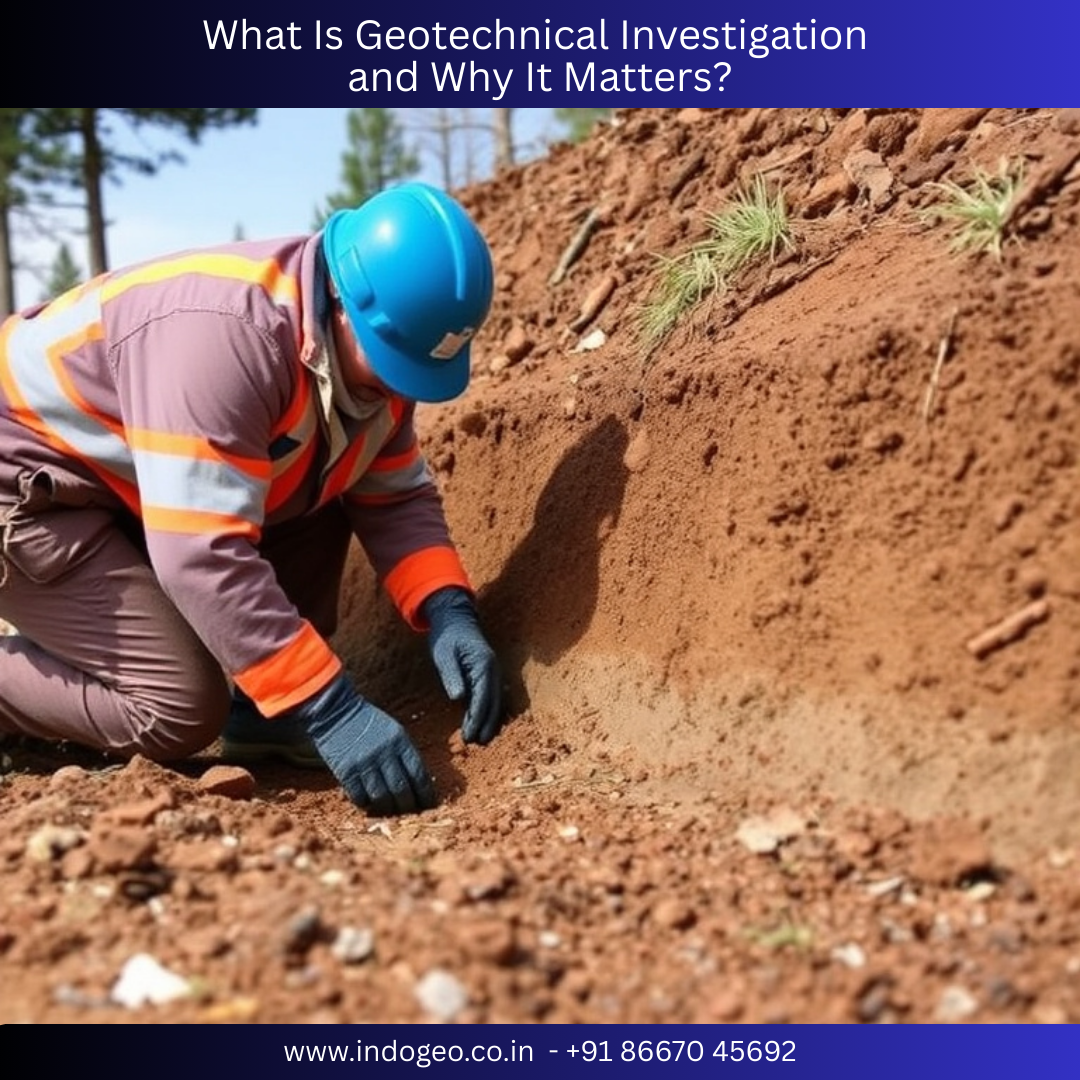
Geotechnical Investigation is a scientific process of studying soil, rock, and groundwater conditions at a construction site. The aim is to determine how the ground will behave under structural loads and environmental conditions.
It involves field investigations, laboratory testing, and engineering analysis to evaluate parameters such as:
Soil type and stratification
Soil bearing capacity
Rock strength and quality
Groundwater level and behavior
In simple terms, it tells engineers whether the ground can safely support the proposed structure and what type of foundation is required.
Objectives of Geotechnical Investigation
The main objectives of a Geotechnical Survey include:
Determining soil and rock properties at the site
Assessing soil bearing capacity and settlement characteristics
Identifying potential ground-related risks
Providing data for safe and economical foundation design
Ensuring compliance with Indian Standards (IS Codes)
Key Activities Involved in Geotechnical Investigation
1. Soil Investigation and Boreholes
Boreholes are drilled to understand subsurface soil layers. Soil samples are collected at different depths for analysis.
2. Soil Testing for Construction
Field tests and laboratory tests are conducted to determine:
Grain size distribution
Atterberg limits
Shear strength
Compressibility
3. Standard Penetration Test (SPT)
The Soil Bearing Capacity Test using SPT helps assess soil strength and density, especially for foundation design.
4. Laboratory Testing
Collected soil samples undergo laboratory testing to confirm engineering properties required for safe construction.
5. Rock Investigation
In rocky areas, rock core drilling, RQD analysis, and strength testing are carried out to assess rock quality and suitability for foundations.
Why Geotechnical Investigation Is Critical Before Construction
Every structure transfers load to the ground. If the ground conditions are not properly understood, it can lead to:
Excessive settlement
Cracks in buildings
Tilting or failure of foundations
Structural instability
A proper Foundation Soil Testing study ensures that the design is based on actual ground conditions rather than assumptions.
Risks of Skipping Geotechnical Investigation
Skipping or conducting inadequate geotechnical investigation can result in:
Structural failure or damage
Increased construction and maintenance costs
Delays due to redesign or remedial measures
Legal and safety issues
Non-compliance with statutory requirements
In many cases, the cost of repairing foundation failures far exceeds the cost of a proper soil investigation.
Benefits of Geotechnical Investigation
Safety
Accurate soil and rock data help engineers design foundations that ensure long-term structural safety.
Cost Savings
Optimized foundation design reduces overdesign and avoids unnecessary construction expenses.
Long-Term Performance
Structures built on properly investigated ground perform better over time with minimal maintenance issues.
Risk Management
Early identification of weak soils, expansive clays, or high groundwater levels helps in planning mitigation measures.
Types of Projects That Require Geotechnical Investigation
Geotechnical investigation is essential for:
Residential and commercial buildings
Industrial plants and warehouses
Roads, highways, and national highway projects
Bridges, flyovers, and metro rail projects
Airports and ports
Dams, tunnels, and retaining structures
Solar parks, wind farms, and infrastructure projects
Compliance with Indian Standards (IS Codes)
In India, geotechnical investigations are carried out as per relevant IS Codes, including:
IS 1892 – Subsurface investigation
IS 2131 – Standard Penetration Test
IS 2720 – Methods of soil testing
IS 6403 – Bearing capacity of foundations
Compliance ensures reliability, safety, and acceptance by authorities and regulatory bodies.
How Geotechnical Investigation Helps in Foundation Design
Geotechnical data forms the backbone of foundation design by providing:
Safe bearing capacity values
Recommended foundation type (isolated, raft, pile, etc.)
Settlement estimates
Ground improvement recommendations, if required
This ensures that the foundation is both safe and economical.
Conclusion: A Key to Sustainable Construction
Geotechnical Investigation is not an optional step—it is a critical foundation of sustainable and responsible construction. By understanding soil and rock behavior through proper Soil Testing for Construction, project stakeholders can ensure safety, reduce risks, control costs, and achieve long-term performance.
Call to Action
If you are planning a construction or infrastructure project, don’t take chances with the ground beneath your structure. Contact a professional geotechnical consultancy today for reliable soil investigation, foundation soil testing, and expert guidance to build with confidence and safety.
Comments

Scroll to Top