
Blog
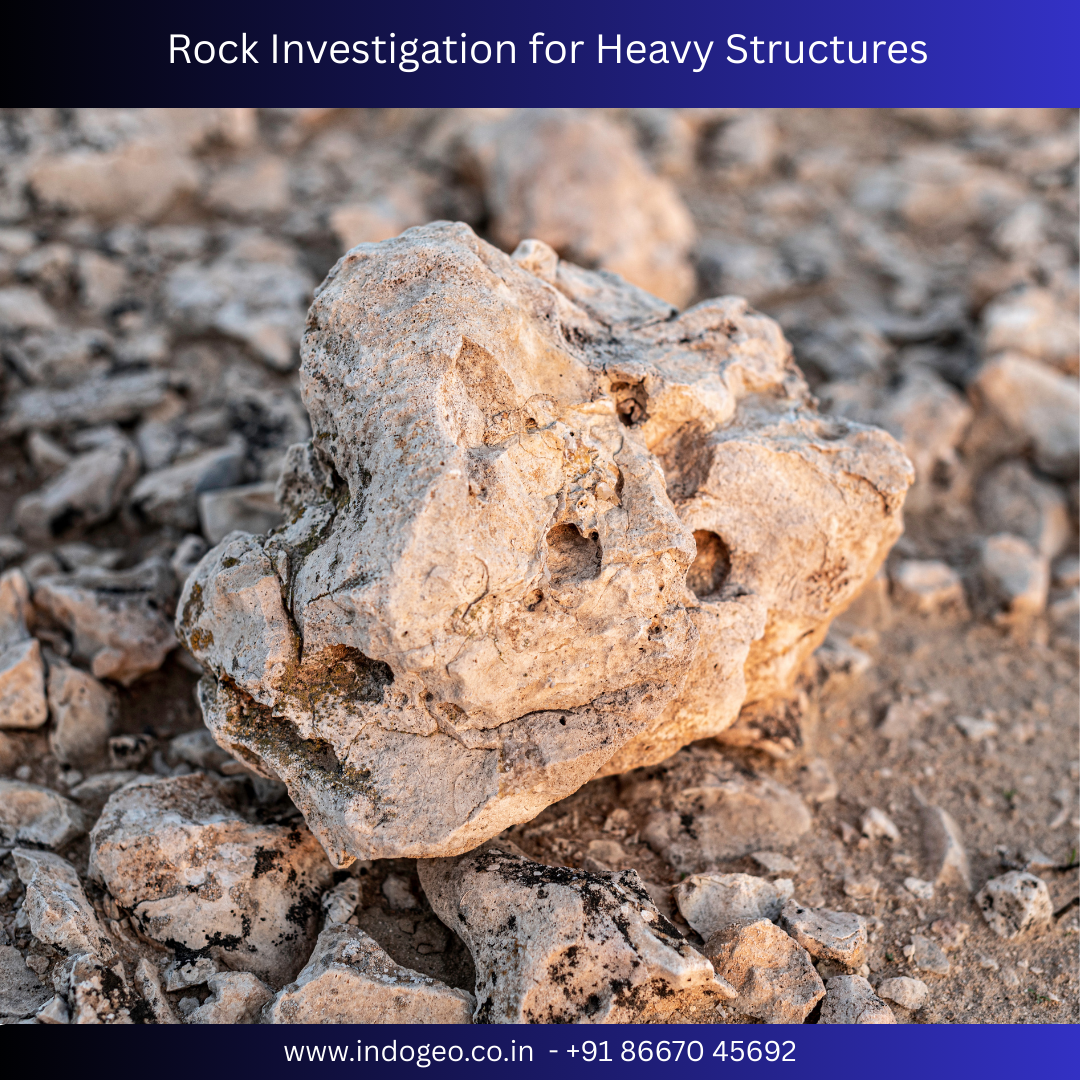
Rock Investigation for Heavy Structures
What Is Geotechnical Investigation? Importance, Process & Benefits
Introduction
Heavy structures such as high-rise buildings, bridges, dams, power plants, and industrial facilities impose enormous loads on the ground. In many parts of India, these loads are transferred not only through soil but directly to rock strata. This makes Geotechnical Investigation, especially rock investigation, a critical step before construction. A well-planned Soil Investigation and Rock Investigation ensures that foundations are safe, economical, and durable over the entire life of the structure.
This blog explains what geotechnical investigation is, why rock investigation is essential for heavy structures, and how it supports safe foundation design and sustainable construction.
What Is Geotechnical Investigation?
Geotechnical Investigation is the systematic study of soil, rock, and groundwater conditions at a project site. It evaluates how subsurface materials will behave under structural loads and environmental influences.
For heavy structures, geotechnical investigation focuses on:
Soil and rock stratification
Strength and deformability of soil and rock
Groundwater conditions
Safe soil bearing capacity or rock bearing capacity
In simple terms, it provides the engineering data needed to design safe and reliable foundations.
Objectives of Geotechnical Investigation
The key objectives of a Geotechnical Survey are:
To identify soil and rock layers below ground level
To determine soil and rock strength parameters
To assess bearing capacity and settlement behavior
To identify weak zones, faults, or fractured rock
To provide recommendations for foundation design
To ensure compliance with Indian Standards (IS Codes)
Key Activities Involved in Geotechnical Investigation
Soil Investigation and Boreholes
Boreholes are drilled to explore subsurface conditions. Both disturbed and undisturbed soil samples are collected, and rock cores are retrieved where rock is encountered.
Soil Testing for Construction
Laboratory tests determine properties such as:
Grain size distribution
Atterberg limits
Shear strength
Compressibility
These tests are essential for Foundation Soil Testing.
Standard Penetration Test (SPT)
The SPT is widely used in India to evaluate soil density and strength. The results help estimate the Soil Bearing Capacity Test values required for foundation design.
Rock Investigation
For heavy structures, rock investigation is crucial and includes:
Rock core drilling
Rock Quality Designation (RQD)
Unconfined Compressive Strength (UCS) testing
Discontinuity and joint analysis
This helps determine whether shallow foundations on rock or deep foundations such as piles are suitable.
Why Geotechnical Investigation Is Critical Before Construction
Heavy structures generate high stresses at foundation level. Without proper geotechnical investigation:
Foundations may experience excessive settlement
Rock may be fractured or weathered, leading to instability
Unexpected groundwater conditions may affect construction
A detailed Geotechnical Investigation ensures that design assumptions match actual ground conditions.
Risks of Skipping Geotechnical Investigation
Skipping or minimizing soil and rock investigation can lead to:
Structural distress and foundation failure
Costly redesign and remedial measures
Construction delays
Safety hazards and legal liabilities
Non-approval from regulatory authorities
The risk is especially high for heavy and critical infrastructure projects.
Benefits of Geotechnical Investigation
Safety
Accurate soil and rock data ensure that foundations can safely carry structural loads.
Cost Savings
Optimized foundation design avoids overdesign and unnecessary construction costs.
Long-Term Performance
Structures founded on properly investigated soil or rock show better durability and reduced maintenance.
Risk Reduction
Early identification of weak rock zones, faults, or high groundwater levels allows for effective mitigation.
Types of Projects That Require Geotechnical Investigation
Geotechnical and rock investigation is essential for:
High-rise residential and commercial buildings
Industrial plants and heavy machinery foundations
Bridges, flyovers, and metro rail projects
Dams, barrages, and hydraulic structures
Power plants and renewable energy projects
National highway and major infrastructure works
Compliance with Indian Standards (IS Codes)
In India, geotechnical investigations are carried out as per established IS Codes, such as:
IS 1892 – Subsurface investigation
IS 2131 – Standard Penetration Test
IS 2720 – Methods of soil testing
IS 6403 – Bearing capacity of foundations
Following these standards ensures safety, reliability, and regulatory acceptance.
How Geotechnical Investigation Helps in Foundation Design
Geotechnical investigation provides engineers with:
Safe bearing capacity values for soil or rock
Recommendations for foundation type (shallow, raft, pile, or rock-anchored)
Settlement and stability analysis
Ground improvement or rock treatment measures, if required
This leads to safe, economical, and constructible foundation designs.
Conclusion: Foundation for Sustainable Construction
For heavy structures, rock investigation as part of geotechnical investigation is not optional—it is fundamental. Proper Soil Investigation, Soil Testing for Construction, and Rock Investigation reduce risks, control costs, and ensure long-term structural performance. These practices support sustainable construction by preventing failures and minimizing resource wastage.
Call to Action
Planning a heavy structure or infrastructure project? Don’t compromise on ground safety. Contact a professional geotechnical consultancy for reliable geotechnical investigation, foundation soil testing, and expert rock investigation services to build with confidence.
Comments

Scroll to Top