
Blog
Rainwater Harvesting
A Complete Guide for Sustainable Water Management
Introduction
Rainwater Harvesting Design is one of the most effective and sustainable solutions to combat water scarcity, groundwater depletion, and urban flooding. With increasing climate variability and growing water demand, a properly designed rainwater harvesting (RWH) system can significantly improve water availability for residential, commercial, industrial, and agricultural applications.
This comprehensive guide explains rainwater harvesting system design, components, calculation methods, and best practices for maximum efficiency.
What is Rainwater Harvesting?
Rainwater harvesting is the process of collecting, filtering, storing, and reusing rainwater from rooftops or open surfaces. It can be used for:
Groundwater recharge
Domestic non-potable use
Landscaping and irrigation
Industrial processes
Reducing stormwater runoff
A well-planned rainwater harvesting design ensures optimal collection efficiency, filtration quality, and storage capacity.
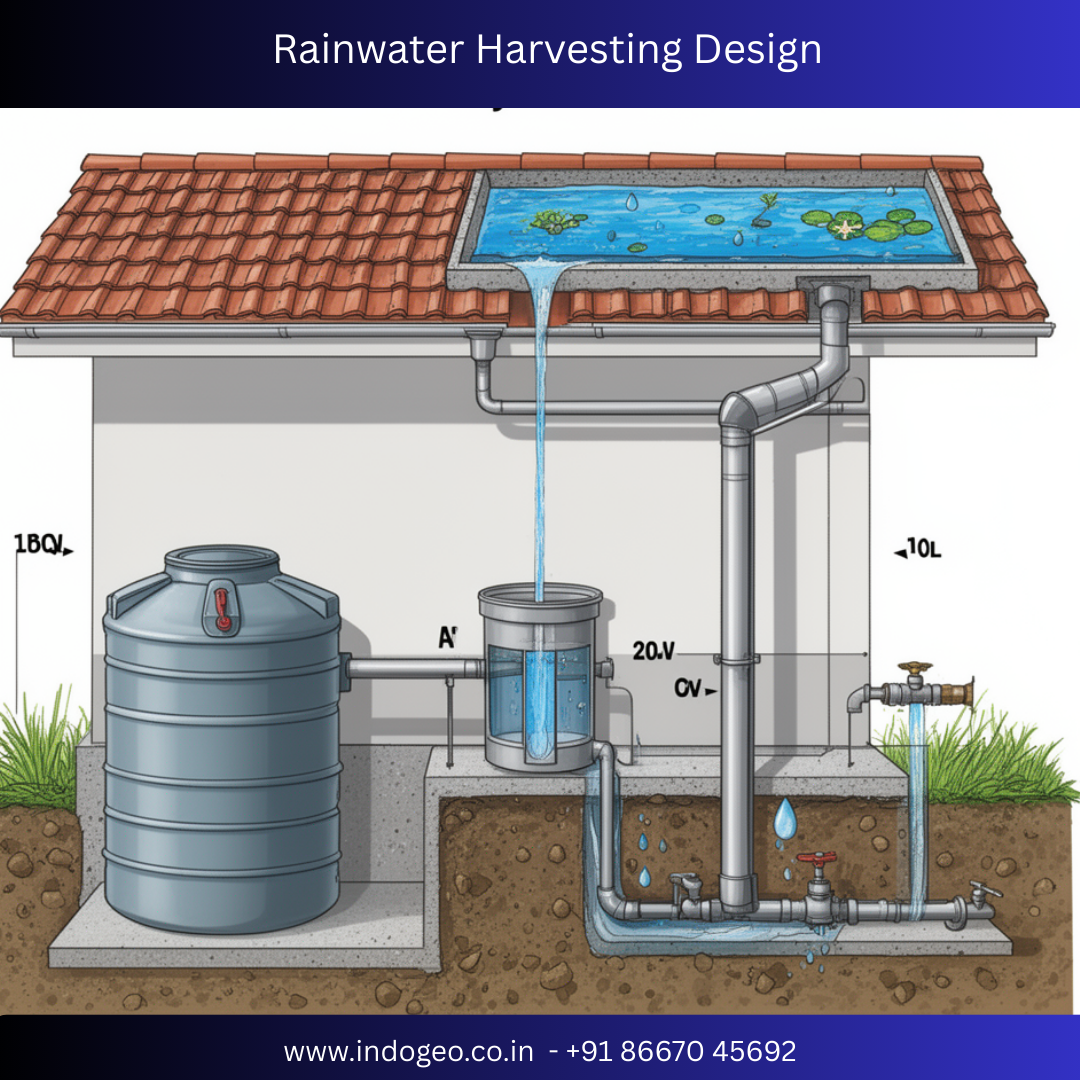
Key Components of Rainwater Harvesting Design
1. Catchment Area
The surface that collects rainwater (typically rooftops or paved areas).
Common materials:
RCC roofs
Metal sheets
Tiles
Open terrace surfaces
The size and material of the catchment directly impact water yield and quality.
2. Conveyance System
Pipes and gutters transport rainwater from the roof to storage or recharge structures.
Design considerations:
Proper slope
Leak-proof joints
Adequate pipe diameter
3. First Flush System
This mechanism diverts the initial dirty runoff containing dust and debris. It ensures only clean water enters the filtration unit.
4. Filtration Unit
Filtration removes suspended particles and impurities. Typical filter layers include:
Pebbles
Gravel
Coarse sand
Activated charcoal
Advanced systems may include pressure filters or UV purification for potable use.
5. Storage or Recharge Structure
Depending on the objective, water can be:
Stored in overhead or underground tanks
Directed into recharge pits
Recharged into borewells
Collected in percolation trenches
Recharge structures are especially effective in regions with declining groundwater levels.
Rainwater Harvesting Design Calculation
Step 1: Calculate Rooftop Area
Example: 1000 sq.ft roof
Step 2: Determine Annual Rainfall
Example: 800 mm (0.8 meters)
Step 3: Apply Runoff Coefficient
For RCC roof ≈ 0.85
Types of Rainwater Harvesting Systems
1. Rooftop Rainwater Harvesting
Best suited for residential and commercial buildings.
2. Surface Runoff Harvesting
Used in open grounds, campuses, and agricultural land.
3. Recharge Borewell System
Improves groundwater table and enhances borewell yield.
Benefits of Proper Rainwater Harvesting Design
✔ Reduces water bills
✔ Increases groundwater levels
✔ Minimizes urban flooding
✔ Supports sustainable construction
✔ Environmentally friendly water source
✔ Enhances water security
Best Practices for Effective Design
Conduct site assessment and soil analysis
Ensure proper filtration to avoid contamination
Size storage tanks based on rainfall pattern
Provide overflow management system
Schedule periodic cleaning and maintenance
Follow local government regulations
Rainwater Harvesting in Urban Planning
Modern infrastructure planning integrates rainwater harvesting design into:
Smart cities
Industrial parks
Residential layouts
Educational institutions
Government buildings
It is now mandatory in many regions due to groundwater conservation policies.
Conclusion
A scientifically planned Rainwater Harvesting Design is not just a water-saving solution—it is a long-term investment in environmental sustainability and resource security. Whether for homes, apartments, industries, or agricultural land, implementing a well-designed rainwater harvesting system ensures resilience against water scarcity and climate change.
If you are planning a rainwater harvesting project, consult experts for site evaluation, design calculations, and system implementation to maximize efficiency and long-term performance.
Comments



Scroll to Top