
Blog
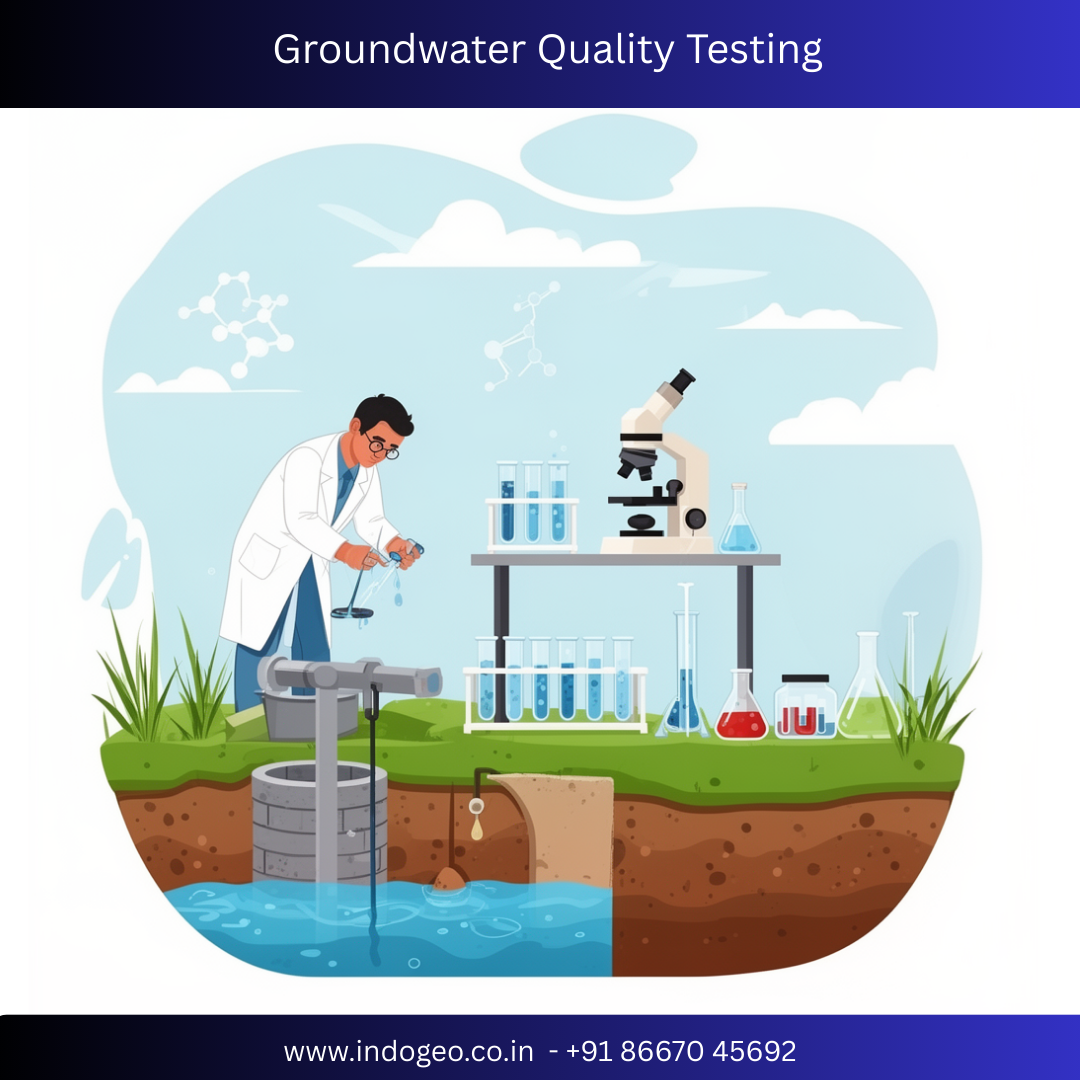
Groundwater Quality Testing
Complete Guide for Safe & Sustainable Water Management
Introduction
Groundwater Quality Testing is essential to ensure safe drinking water, sustainable agriculture, industrial usage, and environmental protection. With increasing urbanization, industrial discharge, and agricultural runoff, groundwater contamination has become a serious concern across many regions.
Regular groundwater testing helps identify harmful contaminants, assess water suitability, and maintain compliance with environmental standards.
What is Groundwater Quality Testing?
Groundwater quality testing is the scientific analysis of water collected from borewells, open wells, and aquifers to evaluate its:
Physical characteristics
Chemical composition
Biological contamination
Heavy metal presence
The objective is to determine whether the water is safe for drinking, irrigation, construction, or industrial use.
Why Groundwater Testing is Important
1. Ensures Safe Drinking Water
Contaminants like fluoride, nitrate, arsenic, and bacteria can pose serious health risks.
2. Protects Public Health
Testing helps prevent waterborne diseases and long-term health complications.
3. Supports Agriculture
Water salinity and chemical levels directly affect crop yield and soil health.
4. Industrial Compliance
Industries must comply with environmental regulations and water discharge standards.
5. Groundwater Resource Management
Monitoring water quality helps prevent aquifer degradation and overexploitation.
Key Parameters in Groundwater Quality Testing
1. Physical Parameters
Color
Odor
Turbidity
Temperature
Total Dissolved Solids (TDS)
2. Chemical Parameters
pH value
Hardness
Chlorides
Sulphates
Nitrates
Fluoride
Iron
Alkalinity
High TDS or extreme pH levels indicate poor groundwater quality.
3. Heavy Metals Testing
Groundwater may contain:
Arsenic
Lead
Mercury
Cadmium
Chromium
These require advanced laboratory testing due to serious health impacts.
4. Biological Parameters
Total Coliform
E. coli
Pathogenic bacteria
Microbial contamination often results from sewage leakage or surface runoff infiltration.
Groundwater Quality Testing Process
Step 1: Sample Collection
Use sterilized containers
Avoid contamination
Label with date, location, and source depth
Step 2: Laboratory Analysis
Samples are tested using standard methods such as:
Titration
Spectrophotometry
Atomic absorption spectroscopy
Microbial culturing
Step 3: Interpretation & Reporting
Results are compared with national and international water quality standards to determine suitability.
Frequency of Groundwater Testing
Residential wells: Once a year
Agricultural wells: Every season
Industrial borewells: As per compliance requirements
Areas with contamination risk: Twice a year
Regular monitoring ensures early detection of contamination.
Common Causes of Groundwater Contamination
Industrial waste discharge
Agricultural fertilizers and pesticides
Septic tank leakage
Landfill leachate
Natural mineral dissolution
Identifying the source is crucial for effective remediation.
Benefits of Professional Groundwater Quality Testing
✔ Accurate laboratory results
✔ Early detection of pollutants
✔ Compliance with environmental norms
✔ Improved water treatment planning
✔ Protection of community health
✔ Long-term groundwater sustainability
Groundwater Quality Testing for Borewells
Borewell water should be tested before:
Drinking usage
Installing RO systems
Agricultural irrigation
Industrial processes
High fluoride or salinity levels may require treatment solutions such as:
Reverse Osmosis (RO)
Iron removal filters
UV disinfection systems
Conclusion
Groundwater Quality Testing is not just a regulatory requirement—it is a critical step in ensuring safe, sustainable, and reliable water supply. Regular testing helps detect contamination early, protect public health, and support long-term groundwater management.
Whether for residential, agricultural, commercial, or industrial purposes, investing in professional groundwater testing ensures water safety and environmental protection.
Comments

Scroll to Top