
Blog
Climate Change Impact on Groundwater
Risks, Challenges & Sustainable Solutions
Introduction
The climate change impact on groundwater is becoming one of the most critical environmental concerns worldwide. Groundwater accounts for nearly 30% of the world’s freshwater resources and supports drinking water supply, agriculture, industry, and ecosystem balance.
However, rising global temperatures, irregular rainfall patterns, extreme weather events, and prolonged droughts are directly affecting groundwater recharge, storage, and quality.
This blog explains how climate change influences groundwater systems and what sustainable solutions can help protect this vital resource.
Understanding Groundwater and Climate Interconnection
Groundwater is stored in underground aquifers and is replenished through rainfall infiltration and surface water recharge. Climate change alters:
Rainfall intensity and distribution
Evapotranspiration rates
Surface runoff patterns
Soil moisture levels
When these factors change, groundwater recharge becomes unpredictable and often insufficient.
Major Climate Change Impacts on Groundwater
1. Reduced Groundwater Recharge
Irregular rainfall and shorter monsoon periods reduce the time available for water to infiltrate into the soil. Heavy downpours often result in surface runoff instead of percolation, decreasing aquifer recharge.
2. Increased Drought Frequency
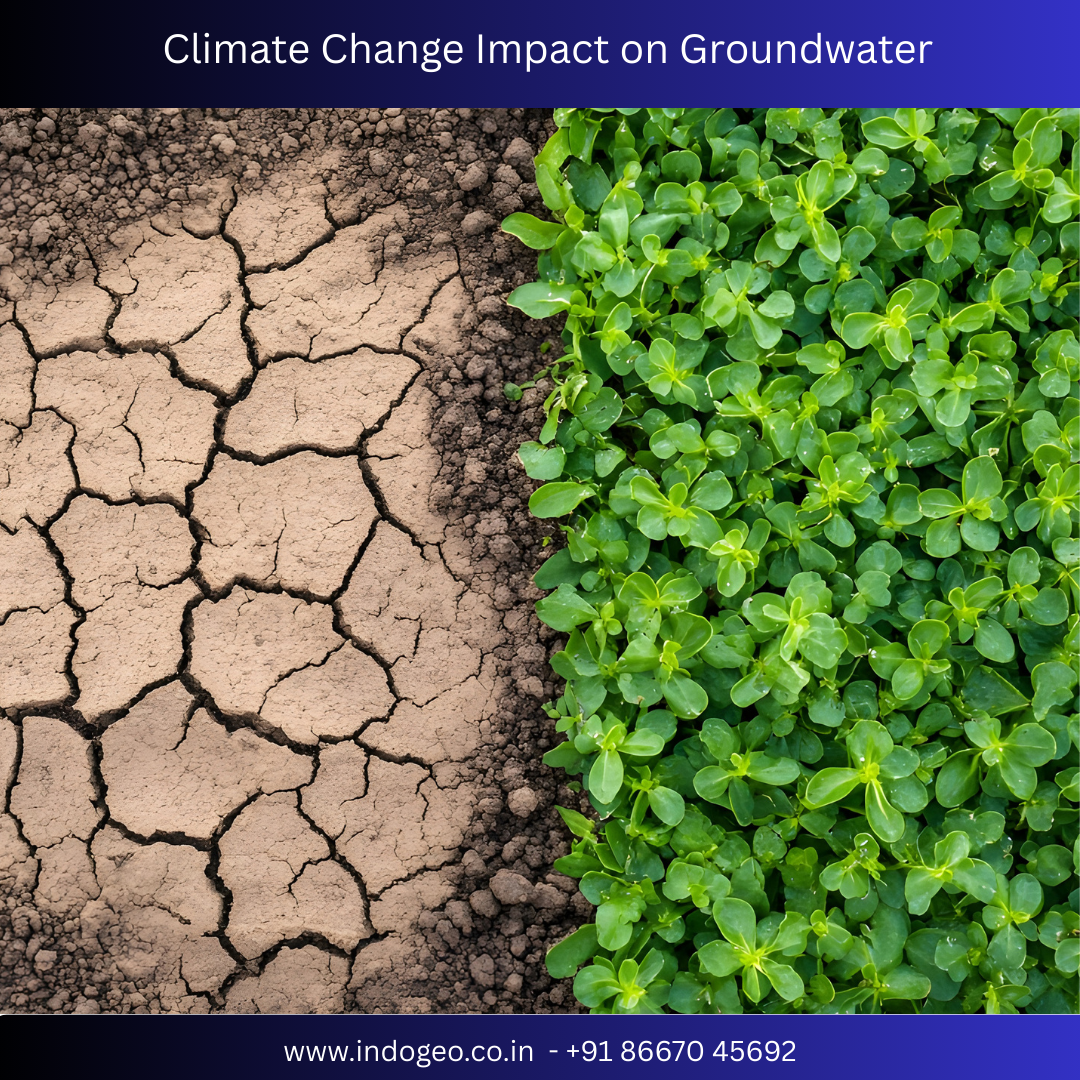
Frequent and prolonged droughts lower groundwater tables significantly. Borewells dry up faster, especially in semi-arid and arid regions.
Effects include:
Drinking water shortages
Reduced agricultural productivity
Increased pumping costs
Aquifer depletion
3. Flooding and Contamination
Extreme rainfall events can cause:
Surface pollutants entering aquifers
Septic tank overflow contamination
Industrial and agricultural runoff mixing with groundwater
This deteriorates groundwater quality and increases treatment costs.
4. Rising Sea Levels & Salinity Intrusion
In coastal regions, sea-level rise due to climate change pushes saline water into freshwater aquifers. This process, known as saltwater intrusion, makes groundwater unsuitable for drinking and irrigation.
5. Increased Evapotranspiration
Higher temperatures increase evaporation from soil and water bodies, reducing the amount of water available for infiltration and groundwater recharge.
Climate Change Impact on Groundwater Quality
Climate variability can alter chemical composition by increasing:
Nitrate concentration
Fluoride levels
Heavy metal mobilization
Salinity levels
Warmer temperatures may also encourage microbial growth, affecting potable water safety.
Sectors Affected by Groundwater Changes
1. Agriculture
Crop irrigation heavily depends on groundwater. Declining aquifers threaten food security.
2. Urban Development
Cities relying on borewells face severe water scarcity during prolonged dry periods.
3. Industry
Manufacturing and processing units depend on consistent water supply for operations.
4. Ecosystems
Wetlands and river base flows are directly influenced by groundwater levels.
Sustainable Solutions to Protect Groundwater
1. Rainwater Harvesting Systems
Properly designed recharge structures increase aquifer replenishment.
2. Managed Aquifer Recharge (MAR)
Artificial recharge techniques help restore depleted groundwater reserves.
3. Water Conservation Practices
Efficient irrigation systems (drip/sprinkler)
Reduced water wastage
Recycling and reuse
4. Groundwater Monitoring & Testing
Regular monitoring ensures early detection of declining water tables and contamination risks.
5. Climate-Resilient Urban Planning
Integrating green infrastructure and permeable surfaces enhances natural recharge.
Role of Policy and Community Participation
Governments and communities must:
Enforce groundwater regulation policies
Promote sustainable extraction limits
Encourage public awareness campaigns
Support watershed management programs
Community-driven conservation efforts significantly improve groundwater sustainability.
Future Outlook
Climate change will continue to stress groundwater resources unless adaptive strategies are implemented. Scientific groundwater assessment, GIS mapping, hydrogeological studies, and sustainable water management planning are essential for long-term resilience.
Investing in climate-resilient groundwater management systems today ensures water security for future generations.
Conclusion
The climate change impact on groundwater is a growing challenge that affects drinking water supply, agriculture, industry, and ecosystems. Reduced recharge, droughts, contamination, and salinity intrusion threaten global water security.
Sustainable groundwater management, rainwater harvesting, artificial recharge, and regular monitoring are crucial to mitigating these impacts. Protecting groundwater today is vital for environmental balance and economic stability tomorrow.
Comments


Scroll to Top