
Blog
Smart Water Management Systems
The Future of Sustainable Water Infrastructure
Introduction
Water scarcity, rapid urbanization, and climate change are placing immense pressure on global water resources. Cities, industries, and agricultural sectors require efficient and intelligent solutions to monitor, manage, and conserve water. Smart Water Management Systems (SWMS) leverage advanced technologies such as IoT, AI, data analytics, and automation to optimize water usage, reduce wastage, and improve operational efficiency.
In this blog, we explore what smart water management systems are, their components, benefits, applications, and why they are essential for sustainable development.
What is a Smart Water Management System?
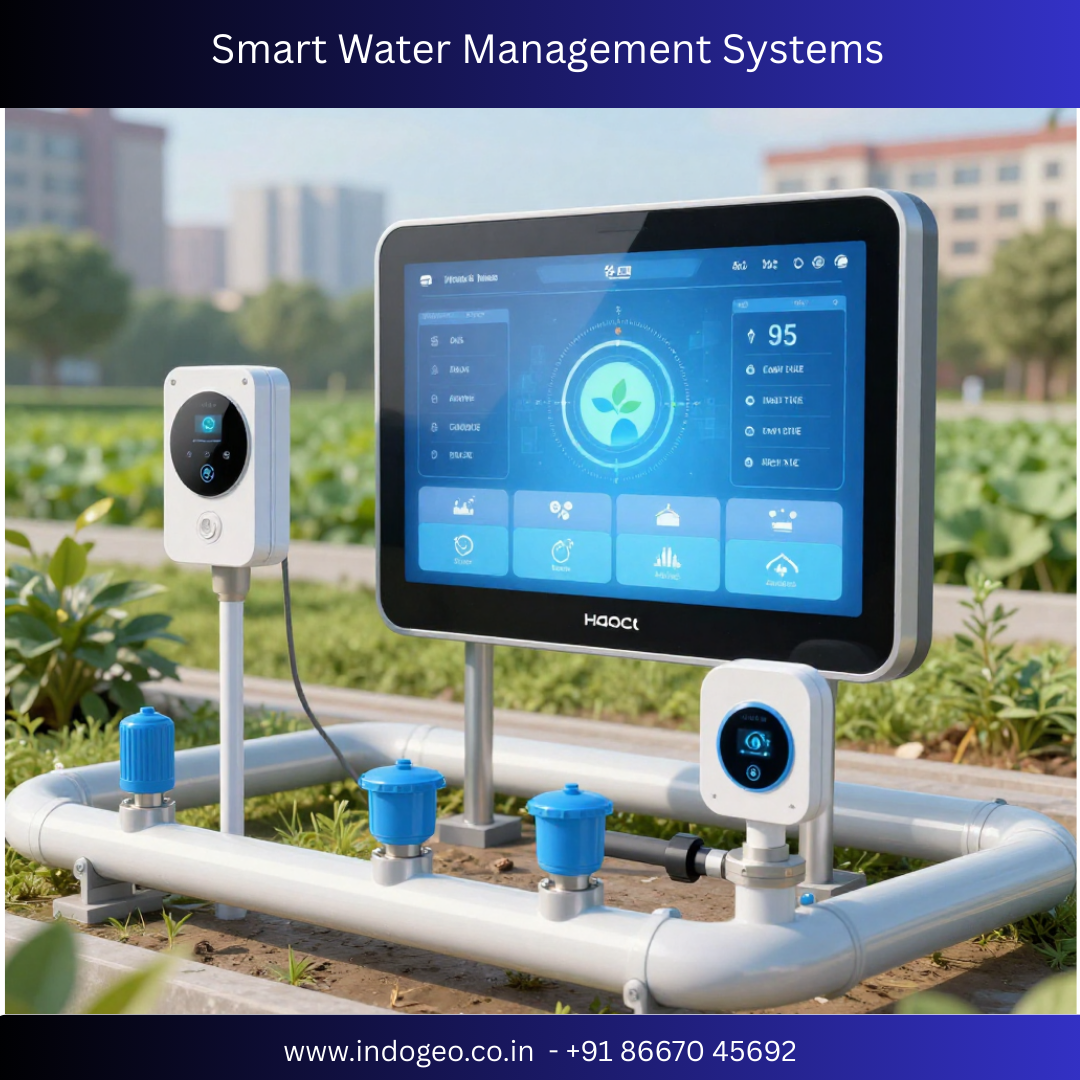
A Smart Water Management System is a technology-driven approach to monitor, control, and optimize water distribution and consumption in real-time. It integrates:
Internet of Things (IoT) sensors
Smart water meters
Cloud-based monitoring platforms
SCADA systems
Data analytics and AI tools
These systems provide accurate insights into water usage patterns, leakage detection, pressure management, and quality monitoring.
Key Components of Smart Water Management Systems
1. IoT-Based Water Sensors
Sensors installed in pipelines, tanks, borewells, and reservoirs measure:
Water level
Flow rate
Pressure
Water quality parameters (pH, turbidity, TDS)
2. Smart Water Meters
Digital meters provide real-time consumption data for residential, commercial, and industrial users, helping reduce water wastage and improve billing accuracy.
3. SCADA & Automation Systems
Supervisory Control and Data Acquisition (SCADA) systems automate water treatment plants and pumping stations, enabling remote monitoring and control.
4. Data Analytics & AI
Advanced analytics help predict:
Water demand patterns
Leak detection
Pipeline failure risks
Preventive maintenance schedules
Benefits of Smart Water Management Systems
1. Water Conservation
Real-time monitoring helps detect leaks and reduce non-revenue water (NRW), preventing significant losses.
2. Cost Reduction
Automation reduces manual labor and operational costs while improving efficiency.
3. Improved Water Quality
Continuous monitoring ensures safe drinking water by detecting contamination early.
4. Data-Driven Decision Making
Authorities and industries can make informed decisions using real-time dashboards and predictive analytics.
5. Sustainable Urban Development
Smart water solutions align with smart city initiatives and climate-resilient infrastructure planning.
Applications of Smart Water Management
🏙 Urban Water Supply Systems
Municipal corporations use smart water grids to manage distribution networks efficiently.
🏭 Industrial Water Management
Industries monitor process water usage and wastewater discharge to comply with environmental standards.
🌾 Agriculture & Irrigation
Precision irrigation systems optimize water usage based on soil moisture and weather data.
🏢 Smart Buildings & Campuses
Automated systems manage water consumption in large residential complexes and commercial buildings.
Role in Smart Cities
Smart Water Management Systems are a critical component of modern smart cities. They integrate with:
Smart energy systems
Smart waste management
Climate monitoring systems
Digital governance platforms
By combining IoT and GIS mapping, cities can monitor entire water distribution networks in real-time.
Challenges in Implementation
High initial investment
Integration with legacy infrastructure
Data security concerns
Skilled workforce requirements
However, long-term cost savings and sustainability benefits outweigh these challenges.
Future Trends in Smart Water Management
AI-based predictive maintenance
Blockchain for water billing transparency
Integration with renewable energy-powered pumping systems
Digital twin technology for water networks
5G-enabled ultra-fast monitoring systems
Why Businesses and Governments Must Adopt Smart Water Systems
With increasing water stress and regulatory requirements, adopting smart water management solutions is no longer optional—it is essential. Governments, infrastructure developers, industries, and agricultural sectors must embrace digital transformation to ensure sustainable water resource management.
Conclusion
Smart Water Management Systems represent the future of sustainable water infrastructure. By integrating IoT, AI, SCADA, and data analytics, these systems help conserve water, reduce operational costs, and ensure efficient resource management.
Organizations investing in smart water technologies today are securing a sustainable and resilient tomorrow.
Comments


Scroll to Top