
Blog
Recharge Structures Design
Complete Guide to Sustainable Groundwater Replenishment
With rising water demand, declining groundwater levels, and climate variability, Recharge Structures Design has become essential for sustainable water resource management. Properly designed recharge systems help restore aquifers, reduce surface runoff, prevent flooding, and improve long-term water availability for urban and rural communities.
This SEO-optimized guide explains types of recharge structures, design principles, components, benefits, and best practices for effective groundwater recharge planning.
What Are Recharge Structures?
Recharge structures are engineered systems designed to collect, store, and infiltrate rainwater or surface runoff into the ground to replenish underground aquifers.
These systems are widely used in:
Urban stormwater management
Agricultural water conservation
Industrial water sustainability planning
Municipal water supply systems
Recharge structures support integrated water resource management strategies.
Why Recharge Structures Design Is Important
Groundwater over-extraction has caused severe depletion in many regions. Cities like:
Chennai
Bengaluru
Hyderabad
have faced water shortages due to declining aquifer levels and reduced natural recharge areas.
Well-designed recharge structures help:
✔ Increase groundwater levels
✔ Reduce urban flooding
✔ Prevent soil erosion
✔ Improve water quality
✔ Support drought resilience
Types of Recharge Structures
1. Recharge Pits
Small excavated pits filled with filter materials (sand, gravel, pebbles) that allow rainwater infiltration. Suitable for residential and small commercial areas.
2. Recharge Trenches
Long, narrow excavations filled with filter media. Ideal for:
Parking areas
Roadside drainage
Institutional campuses
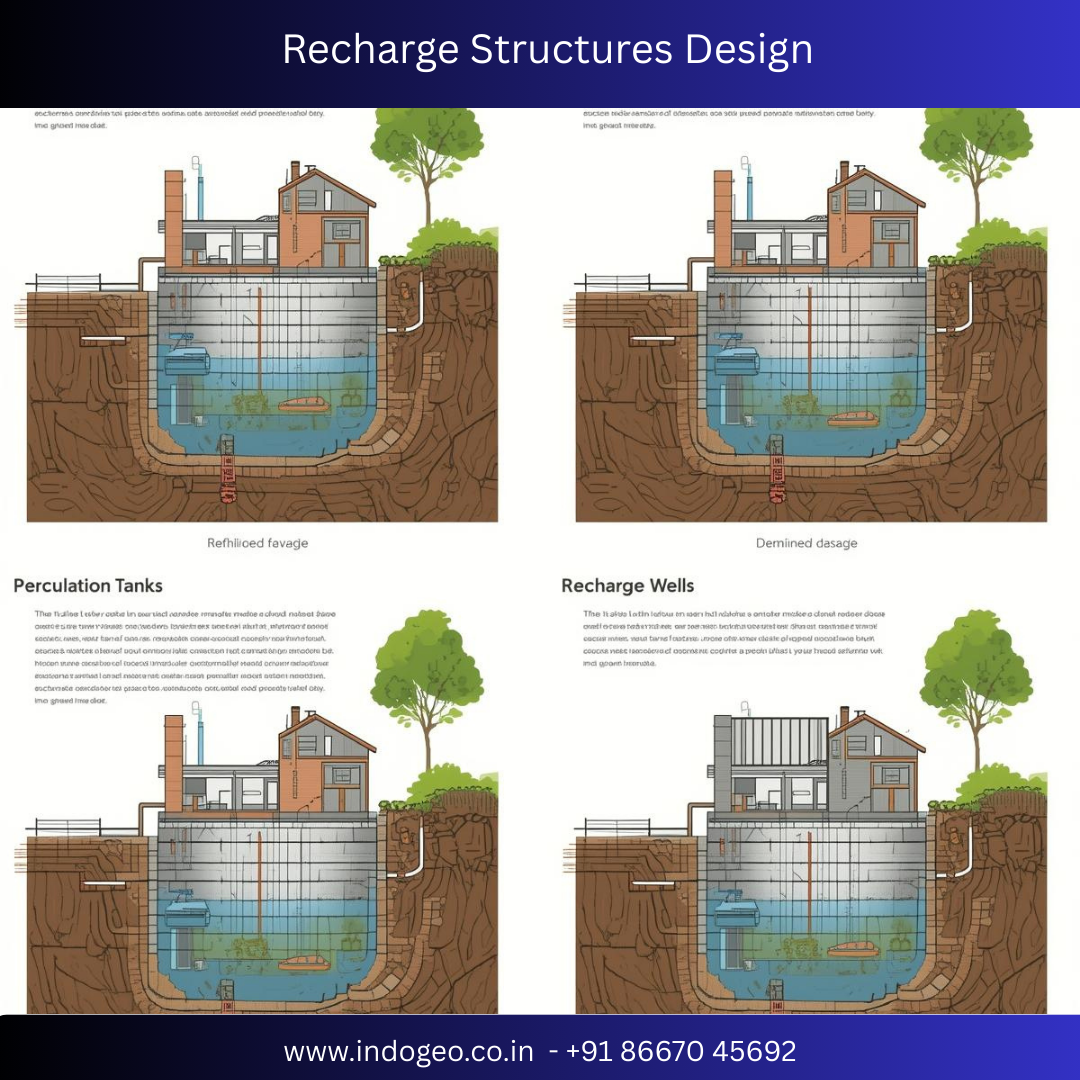
3. Percolation Tanks
Large storage structures that hold runoff water and allow gradual infiltration into the soil. Commonly used in rural and semi-urban regions.
4. Check Dams
Small barriers constructed across streams to slow water flow and enhance groundwater recharge.
5. Recharge Wells
Deep wells that directly inject treated rainwater into aquifers. Often integrated with:
Rainwater harvesting
6. Injection Wells
Used in areas with low permeability soil. Treated water is injected into deeper aquifer layers.
Key Design Considerations for Recharge Structures
1. Hydrogeological Assessment
Before designing recharge systems, assess:
Soil permeability
Aquifer depth
Groundwater flow direction
Water table fluctuations
Rock formations
Hydrogeological studies ensure efficient infiltration and avoid contamination risks.
2. Rainfall Analysis
Design capacity should be based on:
Average annual rainfall
Peak rainfall intensity
Catchment area size
Runoff coefficient
Accurate rainfall data prevents under-design or overflow issues.
3. Catchment Area Calculation
Determine the total area contributing runoff:
Rooftops
Paved surfaces
Roads
Open land
Larger catchment areas require higher storage capacity.
4. Filtration System Design
To prevent contamination, include:
Sand filters
Gravel layers
Charcoal layers
Silt traps
Oil & grease separators
Pre-treatment improves groundwater quality.
5. Structural Stability
Recharge structures must:
Withstand soil pressure
Prevent collapse
Resist clogging
Include overflow arrangements
Durable construction ensures long-term performance.
Recharge Structure Design Process
Site survey and soil testing
Groundwater level assessment
Hydrological calculations
Structural design & material selection
Filtration system integration
Construction & quality inspection
Post-installation monitoring
Proper planning ensures sustainable performance.
Maintenance Requirements
Recharge structures require periodic maintenance such as:
Removing silt deposits
Cleaning filter media
Inspecting inlet pipes
Checking structural integrity
Monitoring recharge rate
Poor maintenance reduces efficiency over time.
Benefits of Well-Designed Recharge Structures
Improved groundwater levels
Reduced dependency on borewells
Flood mitigation
Enhanced water security
Increased agricultural productivity
Long-term sustainability
Recharge systems are cost-effective compared to large water supply projects.
Common Challenges in Recharge Structure Design
1. Clogging Issues
Improper filtration leads to reduced infiltration.
2. Contaminated Runoff
Untreated urban runoff may pollute aquifers.
3. Poor Site Selection
Incorrect geological assessment reduces effectiveness.
4. Lack of Monitoring
Without tracking groundwater levels, performance cannot be evaluated.
Best Practices for Recharge Structures Design
✔ Conduct detailed hydrogeological studies
✔ Use high-quality filter materials
✔ Integrate with stormwater drainage systems
✔ Avoid polluted runoff entry
✔ Provide overflow channels
✔ Implement regular maintenance plans
✔ Monitor groundwater levels periodically
Recharge Structures in Urban Planning
Urban planners are increasingly integrating recharge systems into:
Smart city projects
Industrial parks
Residential layouts
Commercial complexes
Institutional campuses
Combining recharge design with sustainable drainage systems strengthens urban resilience.
Future of Groundwater Recharge Systems
The future includes:
Smart recharge monitoring sensors
GIS-based aquifer mapping
AI-based recharge modeling
Integrated watershed management
Climate-adaptive infrastructure planning
Technology-driven recharge planning enhances efficiency and transparency.
Final Thoughts
Recharge structures design is a cornerstone of sustainable water management. As groundwater resources continue to decline, scientifically designed recharge systems provide long-term water security and environmental stability.
By integrating engineering expertise, hydrogeological assessment, and sustainable design principles, communities can ensure reliable groundwater availability for future generations.
Comments


Scroll to Top