
Blog
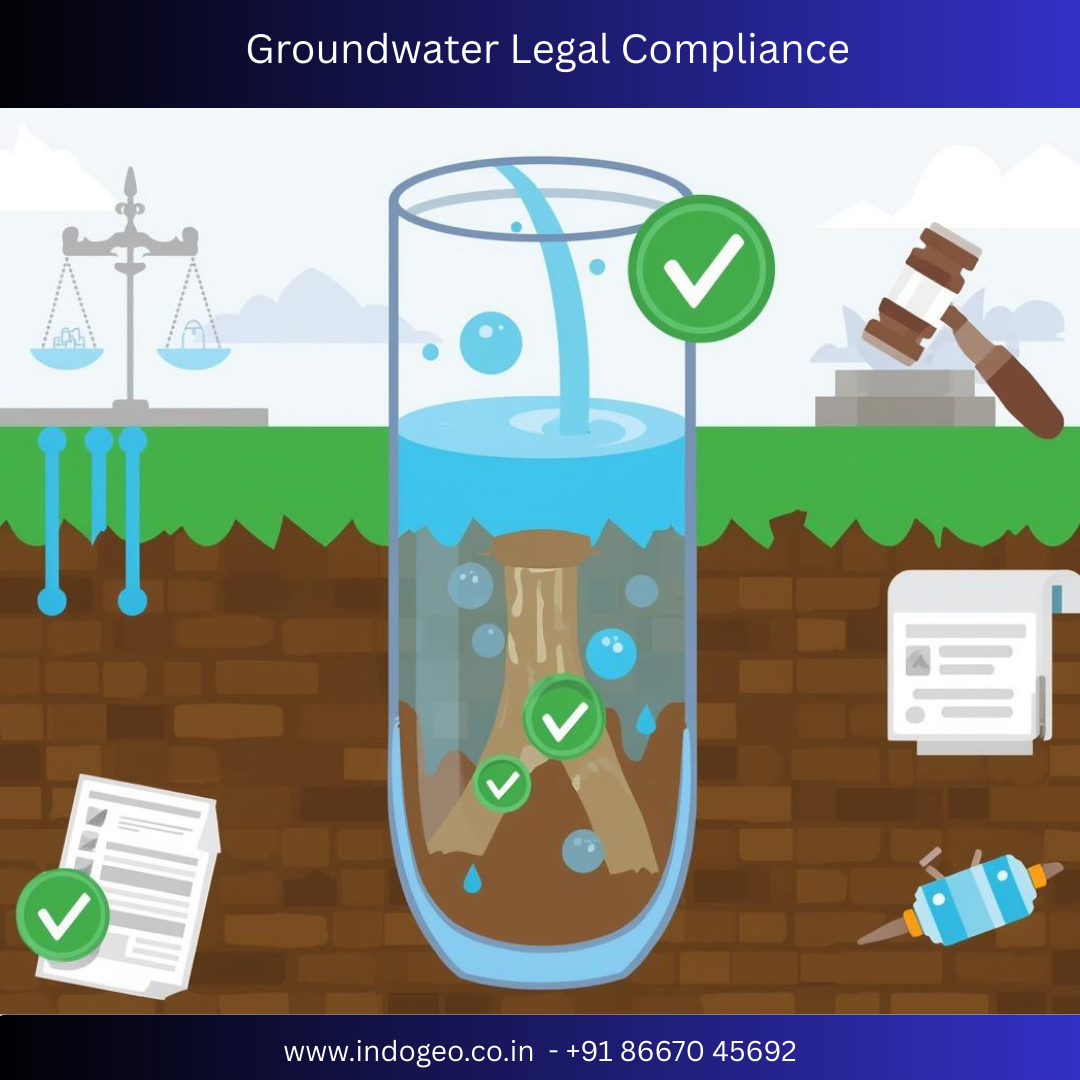
Groundwater Legal Compliance
Complete Guide for Businesses, Industries & Landowners
Groundwater is one of the most critical natural resources for agriculture, industry, and domestic use. However, increasing extraction and declining water tables have made groundwater legal compliance a major regulatory focus across many countries.
For industries, real estate developers, infrastructure projects, and commercial establishments, understanding groundwater regulations is essential to avoid penalties, project delays, and environmental violations.
In this comprehensive guide, we explain Groundwater Legal Compliance, regulatory frameworks, permissions required, compliance checklist, penalties, and best practices.
What is Groundwater Legal Compliance?
Groundwater legal compliance refers to adhering to government regulations and environmental laws governing:
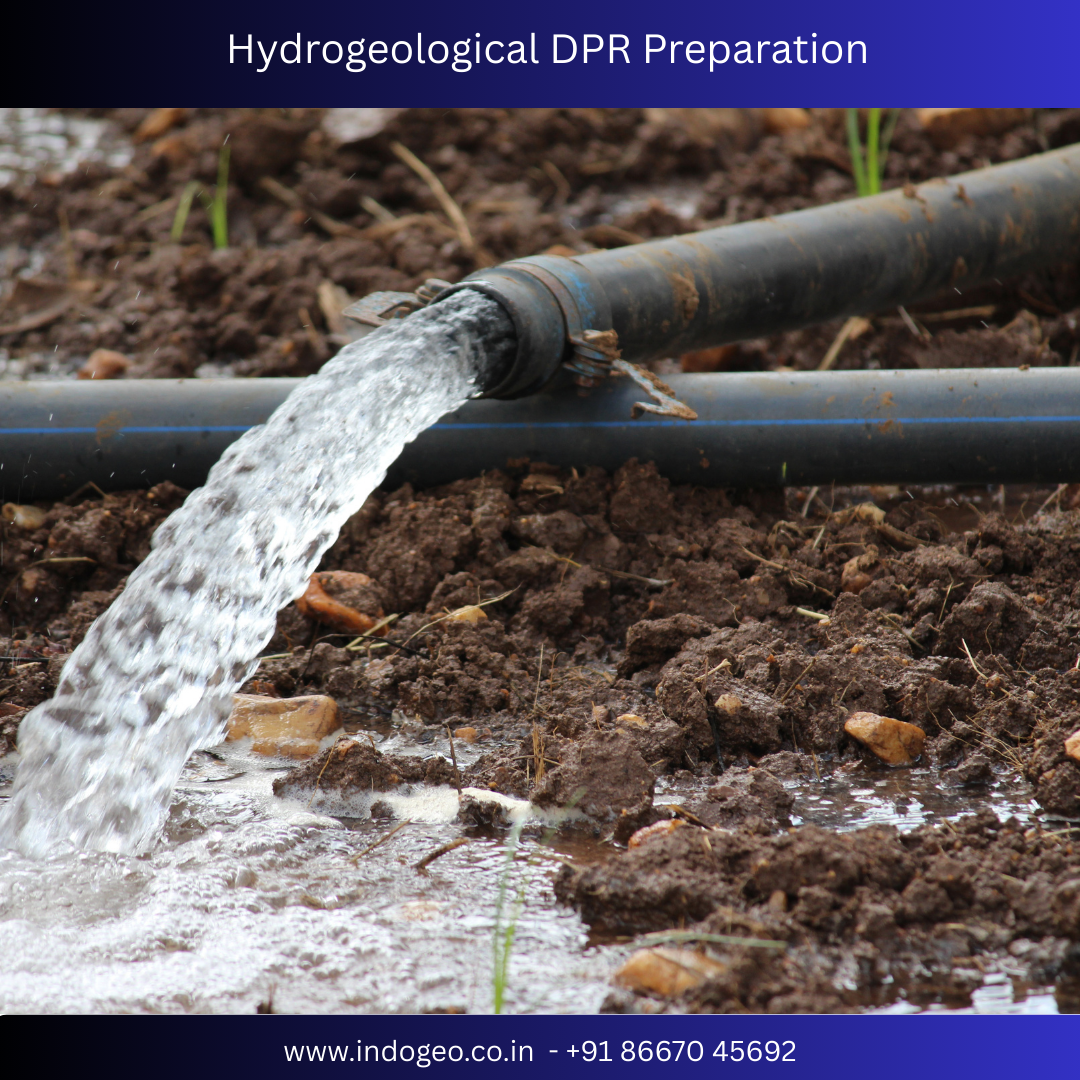
Groundwater extraction
Borewell drilling
Industrial water usage
Recharge structures
Water quality standards
Environmental impact assessment
Regulatory authorities monitor groundwater usage to prevent over-extraction and ecological imbalance.
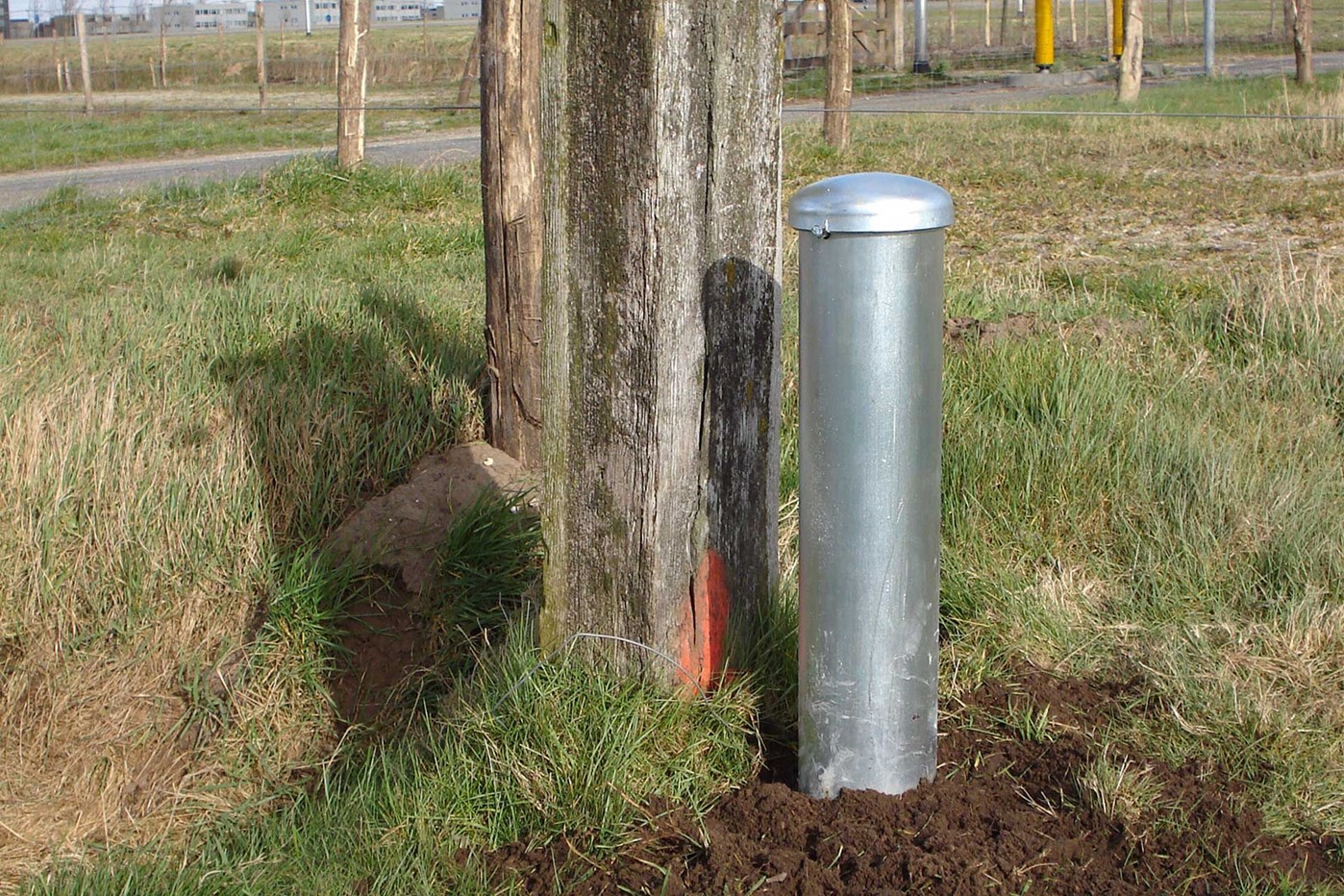
Why Groundwater Compliance is Important

1️⃣ Prevents Legal Penalties
Unauthorized groundwater extraction can result in heavy fines and closure notices.
2️⃣ Protects Water Resources
Ensures sustainable usage and aquifer recharge.
3️⃣ Required for Environmental Clearances
Mandatory for infrastructure and industrial projects.
4️⃣ Enhances Corporate Responsibility
Supports ESG and sustainability goals.
Groundwater Regulatory Authorities in India
In India, groundwater extraction is regulated by:
Central Ground Water Authority (CGWA)
State Groundwater Departments
Pollution Control Boards
Municipal Authorities
These authorities issue No Objection Certificates (NOC) for groundwater withdrawal.
Who Requires Groundwater NOC?
Groundwater NOC is typically required for:
Industries
Infrastructure projects
Mining operations
Commercial buildings
Packaged drinking water units
Large residential townships
Construction projects
Agricultural borewells may have separate state-specific guidelines.
Groundwater Legal Compliance Checklist
1️⃣ Obtain Groundwater NOC
To obtain NOC:
Submit application to CGWA or state authority
Provide hydrogeological report
Submit water requirement details
Install water meter
Propose recharge measures
Approval depends on groundwater availability and zone classification.
2️⃣ Install Water Meter & Monitoring System
Industries must:
Install digital water meters
Monitor extraction volumes
Maintain monthly records
Submit usage reports
Non-reporting can result in compliance violations.
3️⃣ Construct Rainwater Harvesting & Recharge Structures
Recharge measures may include:
Percolation pits
Recharge wells
Stormwater harvesting systems
Check dams
Recharge structures are often mandatory for high-consumption users.
4️⃣ Conduct Groundwater Quality Testing
Regular testing ensures:
Safe water usage
Compliance with environmental norms
Prevention of contamination
Testing parameters include:
pH level
TDS
Hardness
Heavy metals
Fluoride and nitrate levels
5️⃣ Submit Annual Compliance Reports
Industries must submit:
Extraction volume report
Recharge compliance report
Water quality report
Environmental audit documentation
Groundwater Zone Classification (India Example)
Authorities classify areas into:
Safe Zone
Semi-Critical Zone
Critical Zone
Over-Exploited Zone
NOC approvals depend heavily on zone classification.
Penalties for Non-Compliance
Failure to comply may result in:
Heavy financial penalties
Borewell sealing
Legal prosecution
Project suspension
Environmental compensation charges
Strict monitoring has increased in recent years.
International Groundwater Regulations
Globally, groundwater regulations vary:
Environmental protection agencies monitor aquifers
Industrial permits are mandatory
Water usage caps may apply
Sustainability reporting may be required
Compliance frameworks are becoming stricter worldwide due to climate change impacts.
Best Practices for Groundwater Compliance
✅ Conduct Hydrogeological Study
Before drilling borewells.
✅ Implement Sustainable Withdrawal Plan
Avoid over-extraction.
✅ Install Automated Monitoring Systems
Real-time tracking improves compliance.
✅ Maintain Proper Documentation
Keep all approvals and reports organized.
✅ Partner with Environmental Consultants
Professional guidance ensures smoother approvals.
Benefits of Groundwater Legal Compliance
✔ Avoid legal risks
✔ Ensure uninterrupted operations
✔ Improve environmental sustainability
✔ Enhance brand reputation
✔ Support ESG reporting
✔ Promote long-term water security
Real-World Scenario
An industrial unit in a semi-critical zone applied for groundwater NOC from Central Ground Water Authority and:
Installed digital flow meters
Built recharge wells
Submitted quarterly compliance reports
Implemented rainwater harvesting
Result:
Smooth NOC renewal
No penalties
Improved sustainability rating
Future of Groundwater Regulations
With declining aquifers and climate change:
Monitoring will become stricter
Digital reporting may become mandatory
Extraction limits may tighten
ESG compliance will integrate water management
Businesses must adopt proactive compliance strategies.
Final Thoughts
Groundwater legal compliance is no longer optional — it is a regulatory and environmental necessity. Industries, infrastructure developers, and commercial establishments must:
Secure proper approvals
Monitor water extraction
Implement recharge systems
Submit periodic compliance reports
A structured compliance approach ensures legal safety, operational continuity, and environmental sustainability.
Comments
Scroll to Top